
Holding the River
A monument to London's long dance with the Thames

I walked to the Thames Barrier several times over winter and early spring, once from Greenwich Observatory, the other times from Woolwich. The first time I saw it, what surprised me was just how beautiful it was. I had imagined something much more austere, functional, heavy steel, maybe painted in canary yellow to warn boats the river was turning into a wall. Instead, I saw a row of silver shells emerging from the grey water, glistening in the pale sunlight.
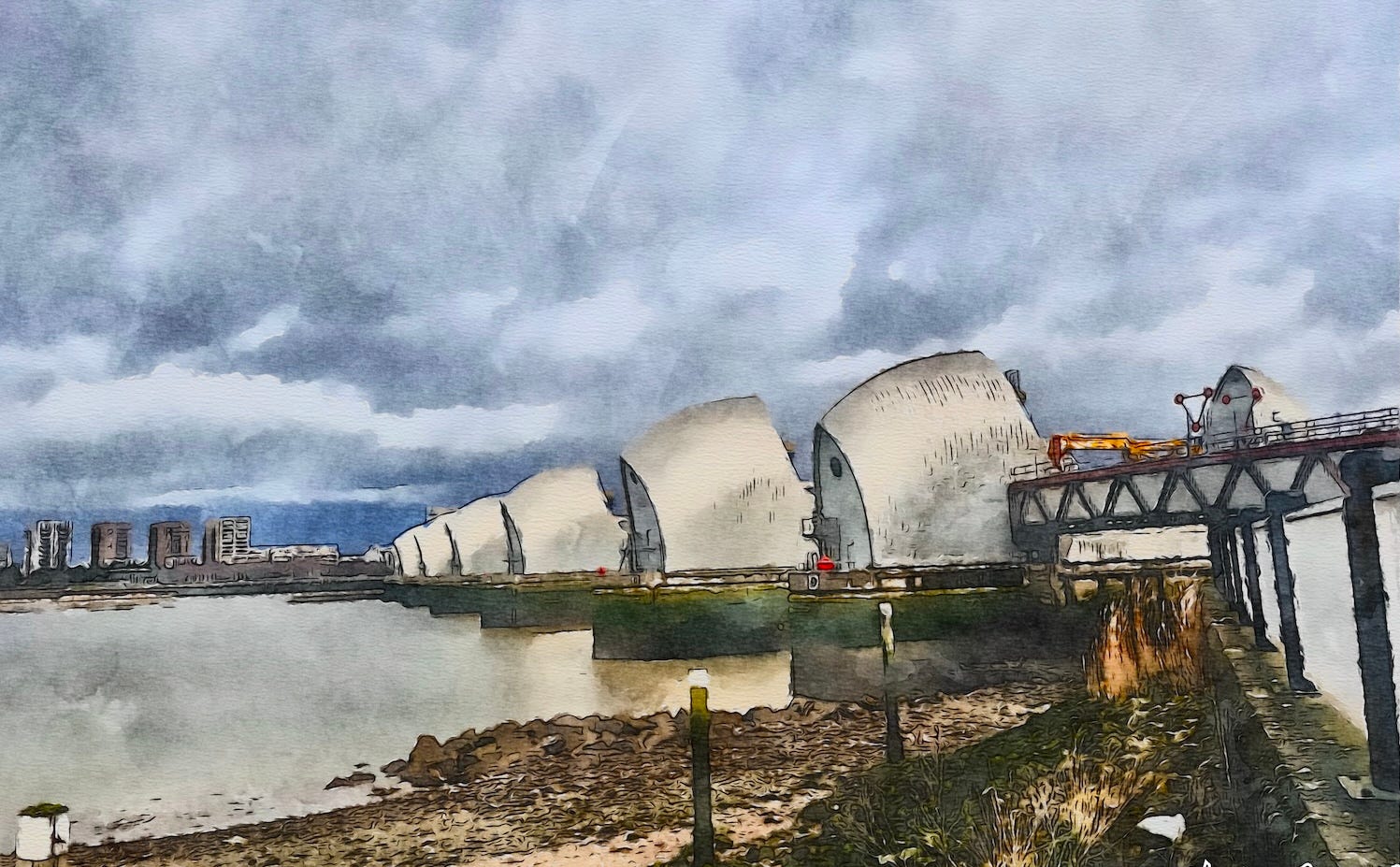
But this is a functional structure, designed to protect London from tidal surges, so there’s something touching about the thought and effort that was expended to make it beautiful as well. And it works. When pressure builds downriver, the rotating gates lift and turn, holding the water back from the city. It is an elegant solution to the problem of living beside a river that is always breathing, rising and falling, and that would regularly swamp the city without being held in check.
London was shaped by the Thames over millennia, but the river is not done with it yet. It still overtops its banks, still actively tries to mould the landscape.
Standing on the bank looking out at the Barrier, it’s hard not to feel both the power of the river and the audacity of the response to it; all that precise engineering, almost graceful, deployed against something that has no interest in being controlled.
But the Barrier does not stop the river. It can only interrupt its flow, briefly, at critical moments; holding the water in suspension, waiting for the tide to turn.
The wind comes off the water. The current moves around the pylons. It’s a constant dance, and the Barrier makes it visible. There’s a beauty in this too.
When the light shifts, the steel structures look more like the hoods of sentinels. They’re keeping vigil over the river, the city, the present and future. But even sentinels get tired. One day this barrier won’t be enough, and London will have to decide what comes next; a new structure further downstream, a managed retreat. The river will keep posing the question more urgently, and we’ll continue to answer, for as long as we can.
I also recorded an audio piece on the Thames Barrier. Listen on Spotify, Apple Podcasts or on Placecloud.